Guatemala earthquake: a quarter century later
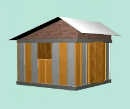
Guatemala earthquake 1976: In a nutshell, it was reconstruction in a sustainable manner, concentrating on setting examples of earthquake resistant adobe houses affordable to the general public.
(based upon 2001 evaluation of adobe houses by University of San Carlos team)
 This project concentrated on the Department of Baja Verapaz, a hard hit area somewhat off the beaten track in the center of the country
.A team of adobe-builders was trained and a total of 150 houses were built in guided self-help in dozens of outlying villages and in the neighborhoods of the small towns
... The condition of the 24 year old houses generally is good
..The differences between them are due to different degrees of maintenance and differences in their location
.The evaluation team came to the conclusion that it is possible to build houses with traditional clay technologies in seismic zones, if the necessary improvements are made.
This project concentrated on the Department of Baja Verapaz, a hard hit area somewhat off the beaten track in the center of the country
.A team of adobe-builders was trained and a total of 150 houses were built in guided self-help in dozens of outlying villages and in the neighborhoods of the small towns
... The condition of the 24 year old houses generally is good
..The differences between them are due to different degrees of maintenance and differences in their location
.The evaluation team came to the conclusion that it is possible to build houses with traditional clay technologies in seismic zones, if the necessary improvements are made.
The evaluation team recommends this type of project where local materials are used and a harmony with the identity of the communities is created. Many years later new houses were built in the same manner.
The technical evaluation compared the results to the instructions in the technical manual produced by Caritas Guatemala in 1976. This manual has been widely used as a reference document in many adobe projects throughout Latin America, and was based on a UN-sponsored investigation after the 1970 Peruvian earthquake. Learning from experiences cannot be underestimated.

The first months after the earthquake construction with adobe was not popular as people were afraid. However, the project area has few other raw materials, notably almost no sand and gravel. Cement was extremely expensive at the time. Through a program of practical education of masons and attractive model houses with improved features (foundation of cyclop concrete, thick adobe walls, careful masonry work, buttresses, tie beam at the wall top, safe roof structure) people started to regain confidence in their tradition. Roofs were mostly of metal sheets at the beginning, but step by step fired clay tiles made their way back.


 (Available in spanish only)