Documents from the Fifth International Ecomaterials Conference
 After the success of the Fifth International Ecomaterials Conference, all the papers, posters and presentations are shared here.
Please follow this link: Documents Fifth International Ecomaterials Conference
All the publications in EcoSur's website are indexed ISSN:
Español: ISSN 1991-587X
English: ISSN 1990-9063
Of cement, chocolate & rum

Although many trendy bars now serve chocolate mojitos, a Swiss and Cuban mix is not obvious. Yet, when it comes to cement, Swiss, Cuban and Indian scientists have tackled one of the world’s lesser known but biggest challenges. As countries develop, demand for housing and infrastructure increases. Concrete is by far the most commonly used construction material to meet these needs, and cement is required to make concrete.
Post-disaster resilence and recovery
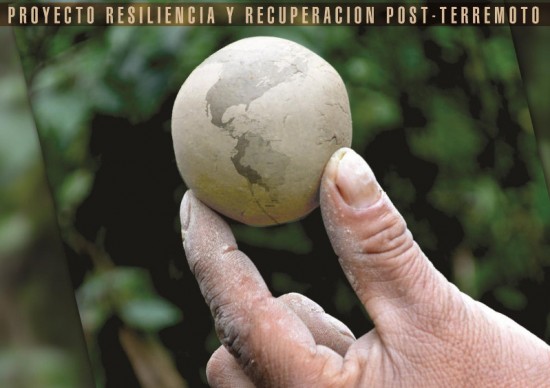
Some months ago we reported on a seminar in Guatemala, where the local Caritas had invited EcoSur specialists to pass their knowlege on to a group of young professionals who were interested in this ancient technology. Meanwhile the organizers can show real practical results, houses have been built, a promotional video is being circulated, a lobby group for adobe has been organized and a manual for self-builders produced.
You can downoad the "Manual para la construcción de viviendas con adobe" (Spanish only, PDF, 10 Mb)
A trip to the 19th Century in Ecuador

In the small rural community of Chingazo, Ecuador, most of the people are small farmers of very low income. Many of them live in traditional huts or half-finished houses that offer no or little protection from the cold of the Andean highlands and against the ash spewed from Tungurahua volcano, Because of their socio-economic status, these families can not improve their situation on their own.


 (Available in spanish only)