The myths of adobe

The myths of adobe....the ancient clay construction technique and earthquake safety was the theme of a seminar organized in Guatemala by CRS and the local Caritas. Two EcoSur experts and 22 participants from NGO's, University, architectural firms and the cement industry debated the possibilities of improving the safety standards of this traditional way of popular construction, still very present in rural areas.
By Kurt Rhyner
Photos by Carlos Juárez
Sun dried mud bricks have been used in many countries around the globe since the early days of human development. It is only for about a century that portland cement has been taking over as the dominating material base in countries like Guatemala. Frequent earthquakes have caused much damage and often the death toll is attributed to a perceived low resilience of adobe buildings. TV cameras tend to focus on heaps of mud with crying mothers, more than on cement based commercial buildings that might also have suffered and must be rebuilt.

Even though earthen construction has been declared dead for many times, there are still thousands of rural dwellers who are eager to rely on this material they have under their feet. Of course, the main motivation is the financial cost. If you can make your own adobes right on your ground, you are able to build a wall without great monetary input. However, experience shows that many of those “no cost walls” are actually vulnerable to earthquakes, mainly because they do not have good foundations nor a good tie beam on top of the walls. Responding to the reconstruction after two earthquakes that struck western Guatemala in 2014, the “Catholic Relief Services” called upon EcoSur to conduct a seminar for technical personnel.
Organized in the town of San Marcos the seminar covered a wide span of topics, but basically following the results of an in-depth investigation that was conducted in El Salvador and concluded last year with a national code of earth construction. A popular video from Fundasal was the backbone of the seminar, supported by scientific information from many sources, among them of course the Peruvian code of earth construction.

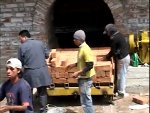
A field visit to the mountainous village of Sibinal gave the participants the possibility to discuss with the locals all practical aspects of adobe construction. Everybody was surprised about the enthusiasm the villagers talked about earthen construction, not only stressing the costs but also the thermal comfort and social aspects. There was opportunity to visit collapsed houses and analyze the reasons for it, the participants quickly pointed out the lacking foundation and the thick joints between the adobes. In a damaged house the analysis resulted in recommendation to the owner on how to repair. They visited different mines in the location and performed the simple tests to determine the usefulness of the earth, and then they had great fun mixing some mud the traditional way with their feet and make their first experience in adobe production.

The five days were loaded with information of all types, social, technical, scientific....including the personal experience of one EcoSur expert who miraculously survived the disastrous 1976 earthquake in spite of his collapsed house. The participation of technicians from the local cement company enriched the discussion, they contributed with basics about the working together of clay, lime and cement and the potentials of producing compressed earth-lime or earth-cement blocks. After some budgeting exercises it became obvious, that adobe and also compressed earth blocks are economically interesting under certain conditions, although definitely not always.
The participants decided to form an action group to spread knowledge about earth construction and connect to other initiatives on the international level. The organizers, CRS and Caritas and also a local architectural firm (Cassa) and the EcoSur network are committed to back this plan.


 Kurt Rhyner