Articles
Bamboo specialists meet in Cuba
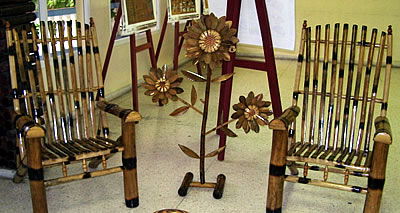
Photo gallery (spanish site)
The first day was mainly in the hands of Cuban and Colombian investigators who discussed different techniques of propagation and cultivation of bamboo, but also the impacts of climate change and the many possibilities to use bamboo plantations to mitigate the ecological damage our society is causing to the earth. Aspects of overall planning to secure the existing water sheds in Cuba were presented as well as scientific data on the quantity of CO2 that is being absorbed by bamboo. Unfortunately the rules to access the international carbon market are difficult to fulfill and even large companies with thousands of hectares of bamboo plantations can not derive a profit from it.
Most presentations on the economic possibility for bamboo centered on the production of pressboards of different types. While a project in Ecuador concentrates on producing different boards with a minimum of energy, a Mexican entrepreneur presented his high-tech industry that produces top quality boards. Other smaller projects in Colombia and Cuba are also experimenting with different approaches, concentrating mainly on the aspects of low cost and avoiding toxic bonding agents. The use of bamboo in its natural form concentrated on roofs and interiors, as everybody is aware of the dangers of using bamboo where water, sun and termites would damage it. The overriding point of this day was the conclusion that it is of uppermost importance to start using the whole plant and not just a selected part of it. In certain projects, mainly when lesser varieties are used, as much as 90% of the bamboo is waste. But bamboo is an excellent fuel and can be used for brick burning and the establishment of micro power plants to produce electricity is feasible in many places. In Brasil it is used to produce paper.
The final day centered on the social integration bamboo can provide with plenty of opportunities to earn an income. Small, medium and large plantations can provide many direct and indirect jobs and if the value chains are well organized, many different lines of production will provide sustainable income and serve the communities with construction materials (mainly for roofs and internal divisions), furniture and also objects of art. Specifically there are many opportunities for part-time occupations which generally benefit women. Several Cuban artisans presented a variety of their large and impressive offer of handmade originals that become more and more popular across the country.
All participants felt that they discovered some new aspects of their profession, be it the scientists searching for new improvements, or the Brazilian entrepreneur who propagates and transplants seedlings, or the Mexican consultant who manages thousands of hectares of guadua, or the Mexican furniture producer who starts joint ventures with Cuban artisans, or the Indian colleagues who presented an interesting project for ecological recuperation based on economical and social progress for small farmers.


